1946FOUNDING RECORD
Constituent Assembly
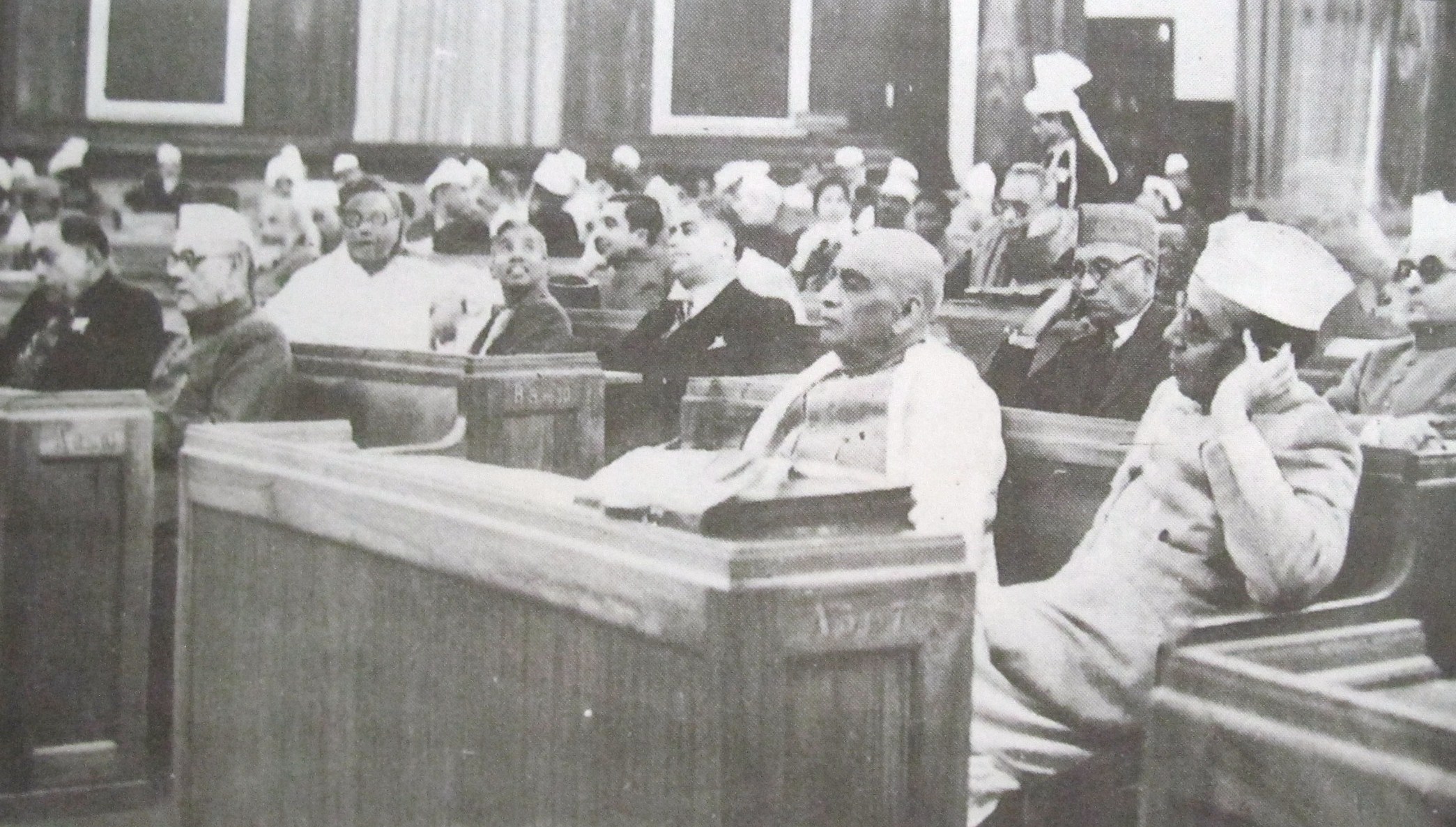
The Constitution-making process proceeds through the Constituent Assembly.
Image provenance ↗Some questions are too important to be reduced to slogans. We are building a place where history, law, policy, data, public movements, arguments and counterarguments can be examined together — with sources attached.

The Constitution-making process proceeds through the Constituent Assembly.
Image provenance ↗The Constitution of India comes into force.
Legislative Department ↗The first commission under Article 340 examined the conditions of socially and educationally backward classes.
Government archive ↗The Second Backward Classes Commission is constituted by the Government of India.
NCBC record ↗The Commission submits its report to the Government of India.
Ministry archive ↗The Government issues the O.M. that becomes central to the litigation later decided in Indra Sawhney.
Official O.M. ↗
A nine-judge Constitution Bench delivers the landmark judgment in Indra Sawhney v. Union of India.
Supreme Court leading case ↗The 77th Amendment inserts Article 16(4A).
Official amendment ↗The amendment gives constitutional status to the National Commission for Backward Classes and inserts Articles 338B and 342A.
Official amendment ↗New judgments, legislation, data and public arguments continue to shape the subject. The archive will grow with the record.
Follow the build →Each source belongs to a larger context. The aim is to place those contexts beside one another instead of turning them into isolated screenshots or slogans.

.png)

This is not designed as a verdict machine. It is being built as a place to read the record, inspect the source, understand the context and encounter the strongest competing arguments.
Government documents, judgments, reports, datasets and rights-cleared historical material.
Date, institution, document identity and usage rights are checked before visual publication.
What happened before, what changed after, and where interpretations differ.
Source links, corrections and opposing arguments remain visible to the reader.
More records. More context. More voices. More ways to inspect the evidence.
Be notified as the archive, timelines and discussion spaces come online.